




Skip to content
View in the app

A better way to browse. Learn more.

Builtsense

A full-screen app on your home screen with push notifications, badges and more.

To install this app on iOS and iPadOS
  1. Tap the Share icon in Safari
  2. Scroll the menu and tap Add to Home Screen.
  3. Tap Add in the top-right corner.
To install this app on Android
  1. Tap the 3-dot menu (⋮) in the top-right corner of the browser.
  2. Tap Add to Home screen or Install app.
  3. Confirm by tapping Install.
A group blog by Structural Community in Civil and Structural Engineering
  • Entries

    36
  • Comments

    0
  • Views

    32,487

Contributors to this blog

About this blog

Use this category to post articles, tips and tricks you've learned. Any topic covering civil & structural engineering is acceptable.

Entries in this blog
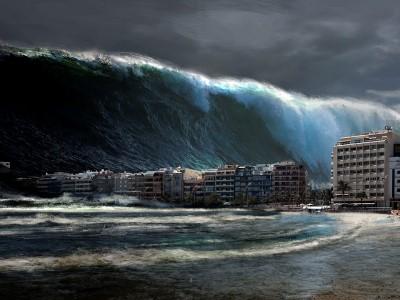
There are generally four types of earthquakes induced processes: 1) Surface rupture, 2) Ground shaking, 3) Ground failure, and 4) Tsunami and Seiches occurrence. Each type has significance to a safe design of structures and is a concern for engineering geologist defining hazard levels. 1. Surface Rupture It is the actual displacement and cracking of the ground surface along a fault trace. Surface rupture is confined to a narrow zone along an active fault. Rupture may happen rapidly during an ear
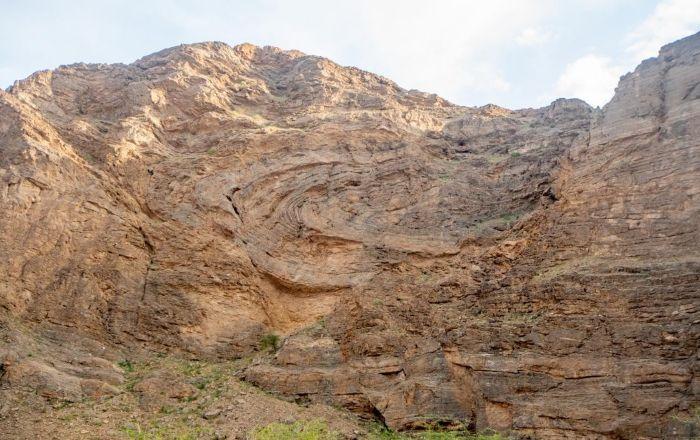
Sedimentary strata may lie horizontal as originally deposited or they may be bent into more or less regular folds, they may be displaced along fractures, or they may be traversed by planes or parting known as joints. Geologic structures influence engineering projects in many ways. Folds and faults obviously have much to do with the selection of dam sites and even such seemingly unimportant matters as the spacing of joints may have vital bearing on uplifting pressure and safety of dams. Gushed an
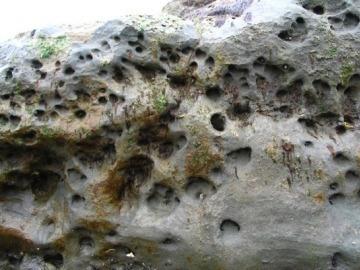
Chemical weathering, or chemical decomposition, involves several important reactions between the elements in the atmosphere and those in the mineral of the earth's crust. In these processes, the internal structures of the original minerals are destroyed, and new minerals are formed, with new crystal structures that are stable under conditions at the earth's surface. Water is of prime importance in chemical weathering. It takes part directly in the chemical reaction. It acts as a medium to transp
All rocks, when exposed for sufficient length of time to the atmosphere, undergo decay from disintegration and decomposition, together referred to as weathering. Disintegration is the break down into small particles by the action of mechanical agents of weathering such as rain, frost etc, decomposition is the breakdown of mineral particles into new compounds by the action of chemical agents such as acid in air and in rain and river water. Denudation is the general term used for the wearing down
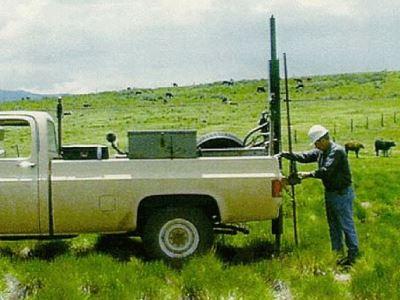
Introduction Accurate and complete subsurface information is necessary for all types of civil engineering projects, for without this information it is not possible to arrive at a rational design for structure and proper construction procedures. Structures have failed because of inadequate or misleading subsurface data, and many so called successful structures could probably have been completed at much less cost because proper consideration have been given to obtaining more complete subsurface in
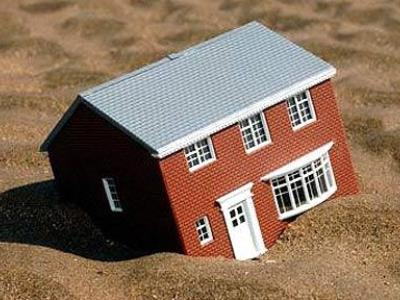
1. Introduction Subsidence is displacement of ground surface vertically over a broad region or at localized areas. It may be either a gradual lowering or a collapse. This can have costly effect on facilities and structures over a subsiding area. Subsidence results from a number of different mechanisms. It can occur as a consequence of natural processes. The dissolving of limestone, salt, or other soluble materials creates underground openings that may collapse. Collapse may also occur in the roo
A tunnel is an elongated, narrow essentially linear underground opening with a length greatly exceeding its width or height. Most tunnels are nearly or exactly horizontal but for special purposes, tunnels may be driven at angles up to 30 degrees from the earth's surface. The one which is greater than 30 degrees from horizontal are designed as shafts. When rocks in tunnels are highly in-competent, especially when underground water is present, tunneling becomes a very costly and hazardous operatio
Tunnel sections Tunnels range in dimensions of cross-sections from those of small galleries driven by miners working with hand tools, to tunnels large enough to accommodate railroad trains, double lane of highway traffic, or to transport very large volume of water as in diversion structures in dams. A minimum size of tunnel is 9 ft high and 4 ft wide at the working face. Designed shapes or sizes of tunnels in x-section conform to a planned uses to tunnel and some extent to the nature of the mate
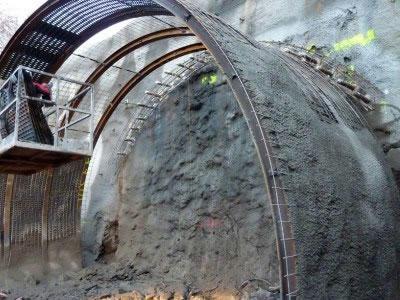
Rock support for tunnels and underground cavern design is a demanding and very complex task. In principle, the problem can be approached from two directions: The first way is to define the relationship between geo-mechanical properties of the rock mass and the support methods used. This is mostly based on the utilization of statistical and empirical data gathered in similar conditions. The second way is to estimate the deformation characteristics of the rock structure, and then the related effec

Account

Navigation

Search

Search

Configure browser push notifications

Chrome (Android)
  1. Tap the lock icon next to the address bar.
  2. Tap Permissions → Notifications.
  3. Adjust your preference.
Chrome (Desktop)
  1. Click the padlock icon in the address bar.
  2. Select Site settings.
  3. Find Notifications and adjust your preference.